Quick answer: A commercial popcorn machine is popcorn equipment built for business use. The traditional kind needs someone to pop and serve. Sweet Robo’s PopCart is the robotic, self-serve alternative: styled like a vintage popcorn cart, it makes hot, fresh popcorn on demand with pick-your-flavor toppings, takes its own payment, and runs unattended as a business.
Key takeaways
- A traditional commercial popcorn machine needs staff to pop, bag, and serve; PopCart automates all of it.
- PopCart is a robotic, self-service popcorn cart that makes fresh popcorn on demand with pick-a-flavor toppings and no one behind the counter.
- Because it runs unattended, there’s no wage bill - you place it in a high-traffic spot and it earns as a business.
- Operators commonly report $1,500-$4,000 per machine per month - earnings vary by location and are never guaranteed.
- Startup can begin as low as around $4,000 (per Sweet Robo), with US-based support, warranties, and assisted placement.
If you search for a commercial popcorn machine, most results are equipment built to sit on a concession counter while a person scoops kernels, pops, bags, and rings up each sale. That model works, but it ties popcorn to labor: someone has to be there for the machine to make money. Sweet Robo takes a different route. PopCart is a robotic, self-service commercial popcorn machine - a vintage-style popcorn cart that makes fresh popcorn on demand, lets the customer pick a flavor, takes payment itself, and runs as an unattended business. This guide explains what “commercial popcorn machine” really means, how the traditional and robotic versions differ, and how PopCart earns without a person on site.
What a commercial popcorn machine is
A commercial popcorn machine is popcorn equipment made for continuous business use rather than a home countertop - heavier kettles, faster output, and durability for all-day operation at a cinema, snack bar, or event. The traditional version is a serving tool: it pops the corn, but a staff member still runs it, bags the product, handles the flavoring, and takes the money.
That’s the key limitation. A traditional unit produces popcorn; it doesn’t produce a hands-off business. Every serving depends on a person being present. PopCart removes that dependency by building the popping, flavoring, and payment into one self-service machine.
Traditional vs. robotic (PopCart)
Both make popcorn for commercial settings. The difference is who runs the machine - a staff member, or the machine itself.
| Traditional commercial popcorn machine | PopCart (robotic) | |
|---|---|---|
| Who operates it | A staff member pops and serves | Fully self-service - no staff on site |
| Freshness | Made fresh, but often held in a warmer | Made fresh, on demand, per order |
| Flavors | Whatever staff prepares | Customer picks a flavor on the screen |
| Payment | Handled by a cashier | The machine takes its own payment |
| Hours | Open only when staffed | Runs unattended, extended hours |
| Main recurring cost | Wages + rent | Rent (no wage bill) |
| Runs as a business | Only with labor | Earns unattended as a business |
The honest comparison: a traditional commercial popcorn machine can serve a crowd well when you already have staff on the floor. PopCart is the better fit when you want popcorn to run as a business on its own - a crowd-magnet you place and let earn without hiring anyone.
How PopCart works
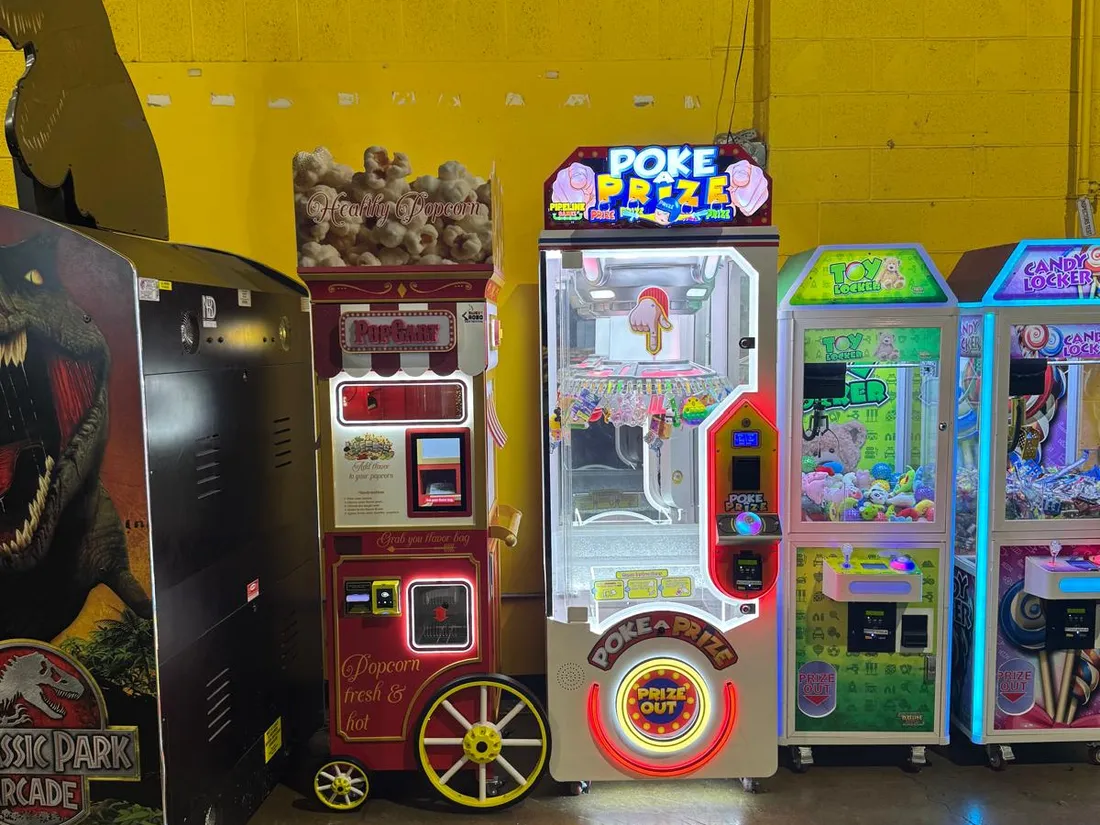
PopCart is a robotic popcorn vending machine styled like a vintage popcorn cart. The customer walks up, taps the screen, picks a flavor, and the machine pops and seasons a hot, fresh serving on demand - then takes payment itself. There’s no pre-bagged product sitting under a heat lamp; each serving is made when it’s ordered.
Because it’s fully automated, PopCart:
- Makes popcorn fresh, on demand - no stale, pre-bagged inventory.
- Lets the customer pick the flavor - a self-service topping choice, no staff needed.
- Serves itself - takes payment and runs unattended, for longer hours than a staffed counter.
- Draws a crowd - the vintage-cart look, the smell, and live popping pull spontaneous buys.
- Only needs periodic restocking - kernels, flavor packets, and cups.
See the full specs on the robotic popcorn machine page, or browse all robotic vending machines to compare the lineup.
Running it as a business
This is where the robotic model separates from the traditional one. With no one behind the counter, PopCart’s revenue isn’t eaten by wages - the main recurring cost is the rent you pay the venue. That’s what turns popcorn, a classic high-margin concession, into a largely hands-off business.
Placement does most of the work. PopCart earns on foot traffic, so the location matters more than anything else. The strongest spots are places where people are relaxing, waiting, or out for entertainment:
- Cinemas and theaters - popcorn’s classic setting.
- Family entertainment centers, arcades, and bowling alleys.
- Malls, boardwalks, and busy promenades.
- Waiting areas and lobbies with steady traffic.
Place the machine where people can see and smell it working - visibility drives impulse buys. For a deeper look at siting, see where to put a vending machine.
What operators report earning. Operators commonly report $1,500-$4,000 per machine per month, with high-traffic venues at the top of the range. These figures are attributed to operators, vary by location, pricing, and operation, and are never guaranteed. For the full profit breakdown, see are popcorn vending machines profitable.
What it costs to start. According to Sweet Robo, startup can begin as low as around $4,000, with no employees to hire. Ongoing costs are the monthly rent, supplies, and a few hours a week of restocking. Sweet Robo also provides US-based support, warranties, and assisted placement to help operators land strong locations. Confirm current pricing before budgeting. If you’d rather host a machine than operate one, you can put a machine in your venue, and the wider model is laid out on the vending machine business page.
Frequently asked questions
What is a commercial popcorn machine?
It’s popcorn equipment built for business use rather than home use - durable enough for all-day operation at venues like cinemas and snack bars. The traditional kind is operated by staff who pop and serve; PopCart is a robotic, self-service version that runs unattended.
How is PopCart different from a traditional commercial popcorn machine?
A traditional machine needs a staff member to pop, bag, flavor, and take payment. PopCart automates all of that: the customer picks a flavor on the screen, the machine makes a fresh serving on demand and takes its own payment, so it runs with no one on site.
Does PopCart make fresh popcorn?
Yes. It pops and seasons each serving on demand when the customer orders, rather than holding pre-bagged product under a warmer. The customer also chooses the flavor at the screen.
How much can a commercial popcorn machine like PopCart earn?
Operators commonly report $1,500-$4,000 per machine per month, driven mainly by location foot traffic. Earnings vary by location, pricing, and operation and are never guaranteed.
How much does it cost to start?
Sweet Robo says startup can begin as low as around $4,000, with no employees to hire. Ongoing costs are mainly the venue rent and supplies. Confirm current pricing with Sweet Robo.
Do I need staff to run PopCart?
No. PopCart is self-service and runs unattended - it takes its own payment and only needs periodic restocking. That’s the core difference from a traditional, staffed commercial popcorn machine.
Related reading: Are popcorn vending machines profitable? · Best vending machines to own · Where to put a vending machine
Ready to run popcorn as a business? Explore the robotic popcorn machine (PopCart) or see how the robotic vending machine business works.