
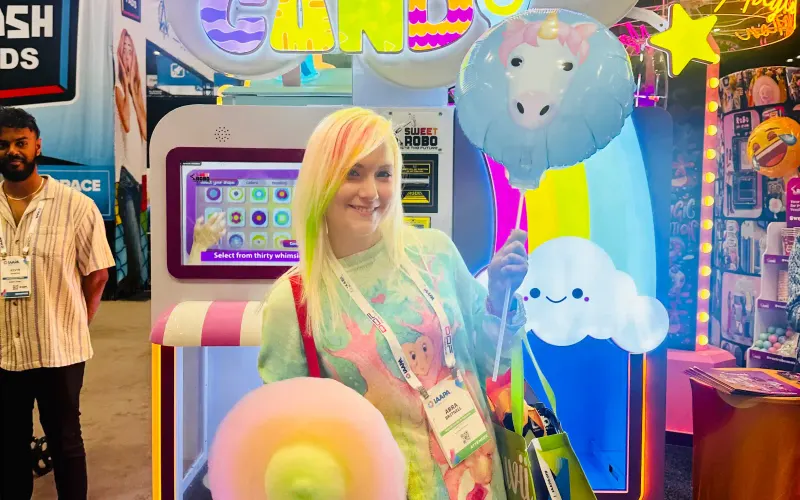
Quick answer: Robotic vending machines commonly earn operators about $1,500-$4,000 per machine each month, according to figures operators report. The exact number depends on location foot traffic, the type of treat, pricing, and how well the machine is placed. Because the machine runs unattended and makes a fresh product on demand, most of that revenue isn’t eaten up by labor - the operator’s main recurring cost is the rent paid to the location.
Key takeaways
- Operators commonly report earning roughly $1,500-$4,000 per month per machine - though earnings vary and are never guaranteed.
- The biggest lever is location: the same machine earns far more in a busy mall or family entertainment center than in a quiet corner.
- A robotic machine runs 24/7 with no on-site staff, so revenue isn’t consumed by wages - the main recurring cost is monthly rent to the venue.
- Sweet Robo says a machine can start as low as around $4,000, a fraction of a food truck or franchise, which shortens the path to ROI.
- Sweet Robo includes assisted placement, setup, training, and US-based support - the parts of the business that usually decide whether a machine actually earns.
If you’re weighing a robotic vending machine as a business, the first question is always the same: how much does it actually make? The honest answer is a range, not a promise - but it’s a range you can reason about, because the factors that move it are concrete. This guide breaks down the numbers operators report, what drives them up or down, and how the economics of a fresh-made robotic machine differ from a traditional snack-and-soda vending route.
How much do robotic vending machines make per month?
Operators commonly report earning $1,500-$4,000 per month from a single robotic vending machine. That’s the working range to plan around - but treat it as a range shaped by real variables, not a fixed figure. A cotton candy or ice cream robot placed in a high-traffic family venue sits at the top of that band; the same machine in a low-footfall location sits well below it.
Two things make robotic machines interesting compared with ordinary vending. First, the product is made fresh in front of the customer, which supports a higher price and drives impulse buys. Second, the machine is a small piece of theater - people stop to watch a robot spin cotton candy or build an ice cream cup, and watching turns into buying. That “retailtainment” effect is why a robotic machine in the right spot can out-earn a shelf of pre-packaged snacks.
What operators actually report, by venue type
The clearest way to understand the range is to look at how it moves with the location. These are figures operators report to Sweet Robo across different venue types - representative examples, not guarantees:
| Operator | Venue type | Avg. monthly revenue (reported) | Hands-on time |
|---|---|---|---|
| Henry | Indoor playground | ~$3,329 / month | 2-3 hrs / week |
| Vadim | Retail store | ~$2,180 / month | 1-2 hrs / week |
| Jared | Family resort | ~$4,201 / month | 3-5 hrs / week |
Two patterns stand out. The venue drives the number - a family resort and an indoor playground, where parents and kids are already in a spending mood, outperform a general retail floor. And the time commitment stays low - a handful of hours a week for restocking and checks, because the machine handles payment, production, and monitoring itself. Earnings depend on location and operation and will differ for every operator.
What drives the number up or down
Five factors decide where a machine lands in the range:
- Foot traffic. The single biggest lever. Malls, family entertainment centers, cinemas, hospitals, and promenades keep a machine busy; a quiet office lobby won’t.
- Audience fit. Treat machines earn most where kids and families gather. Match the machine to the crowd.
- The treat itself. A fresh, made-to-order product (cotton candy, ice cream, popcorn) commands a higher price and more impulse buys than a canned drink.
- Pricing and product mix. Multiple flavors, colors, and shapes give customers a reason to pay - and to come back.
- Placement quality. A machine 20 feet from the main flow of people can earn a fraction of the same machine on the main path. Getting placement right is often the difference between the top and bottom of the range - which is why Sweet Robo offers assisted placement for its operators.
Robotic vs. traditional vending: why the economics differ
A traditional vending route sells pre-packaged, low-margin items and lives or dies on volume across many machines. A robotic treat machine flips that: fewer machines, a higher-value fresh product, and an experience that pulls customers in.
The cost structure is the real story. Because the machine is fully automated and requires no on-site staff, there’s no wage bill eating the revenue - the operator’s main recurring cost is the fixed monthly rent paid to the location owner. Everything above that rent, minus supplies and upkeep, is margin. That’s a fundamentally different equation from a food truck or a staffed kiosk, where labor is the largest ongoing expense.
It also compares favorably with a franchise. A robotic machine can start at a fraction of a franchise’s entry cost, with no employees to hire and manage - which is why the model is often described as passive-income-oriented. If you want the full picture of how the business runs day to day, see our guide to the robotic vending machine business, or explore hosting a machine at your venue if you own the location rather than the machine.
What it costs to start, and how ROI works
According to Sweet Robo, a machine can start as low as around $4,000 - far below a food truck or franchise. The typical revenue model is simple: place the machine in a high-traffic location, pay a fixed monthly rent to the venue, and keep the remaining revenue after supplies.
Because there’s no staff cost, the payback math is driven mostly by location and price. A machine near the top of the reported range recovers its cost far faster than one in a weak spot - which, again, is why placement matters more than almost anything else. Sweet Robo backs the hardware with setup, training, maintenance support, and a US-based support team, so machines stay running and earning rather than sitting broken. (If you’re weighing the company itself, we wrote an honest look at whether Sweet Robo is reliable.)
Earnings and ROI are variable and depend on location, foot traffic, pricing, and operation. No specific return is guaranteed.
How to maximize what a machine earns
- Win the location first. A great location with an average machine beats a great machine in a poor location, every time. Use Sweet Robo’s placement help rather than guessing.
- Match the machine to the crowd. Kids and families → cotton candy, ice cream, popcorn. Browse the full lineup of robotic machines to fit the venue.
- Keep it stocked and running. A few hours a week of restocking and remote monitoring keeps the machine earning; an empty or offline machine earns nothing.
- Lean on the experience. The live “robot makes your treat” show is your best marketing - place the machine where people can see it work.
Frequently asked questions
How much does a robotic vending machine make per month?
Operators commonly report $1,500-$4,000 per month per machine, depending on location, the type of treat, pricing, and foot traffic. High-traffic family venues sit at the top of that range; low-traffic spots sit below it. Earnings vary and are never guaranteed.
Are robotic vending machines profitable?
They can be, because the machine runs with no on-site staff, so revenue isn’t consumed by wages. The operator’s main recurring cost is the monthly rent paid to the location; most of the remaining revenue, after supplies and upkeep, is margin. Profitability still depends heavily on getting a high-traffic location.
How much does it cost to start a robotic vending machine business?
Sweet Robo says a machine can start as low as around $4,000 - a fraction of a food truck or franchise, with no employees to hire. Exact pricing depends on the machine and configuration; confirm the current entry price with Sweet Robo.
How much time does it take to run one?
Operators report just a few hours a week per machine - typically restocking and quick checks - because the machine handles payment, production, and remote monitoring on its own. That’s what makes the model attractive as a passive-income business.
What earns more, a robotic machine or a regular vending machine?
A robotic treat machine sells a higher-value, fresh-made product and draws a crowd with its live “show,” which supports a higher price and more impulse buys than pre-packaged snacks. Traditional vending relies on volume across many low-margin machines; robotic vending earns more per machine when it’s placed well.
Ready to see the numbers for your own location? Explore the robotic vending machine business or start with our buyer’s guide to the best cotton candy vending machine.