
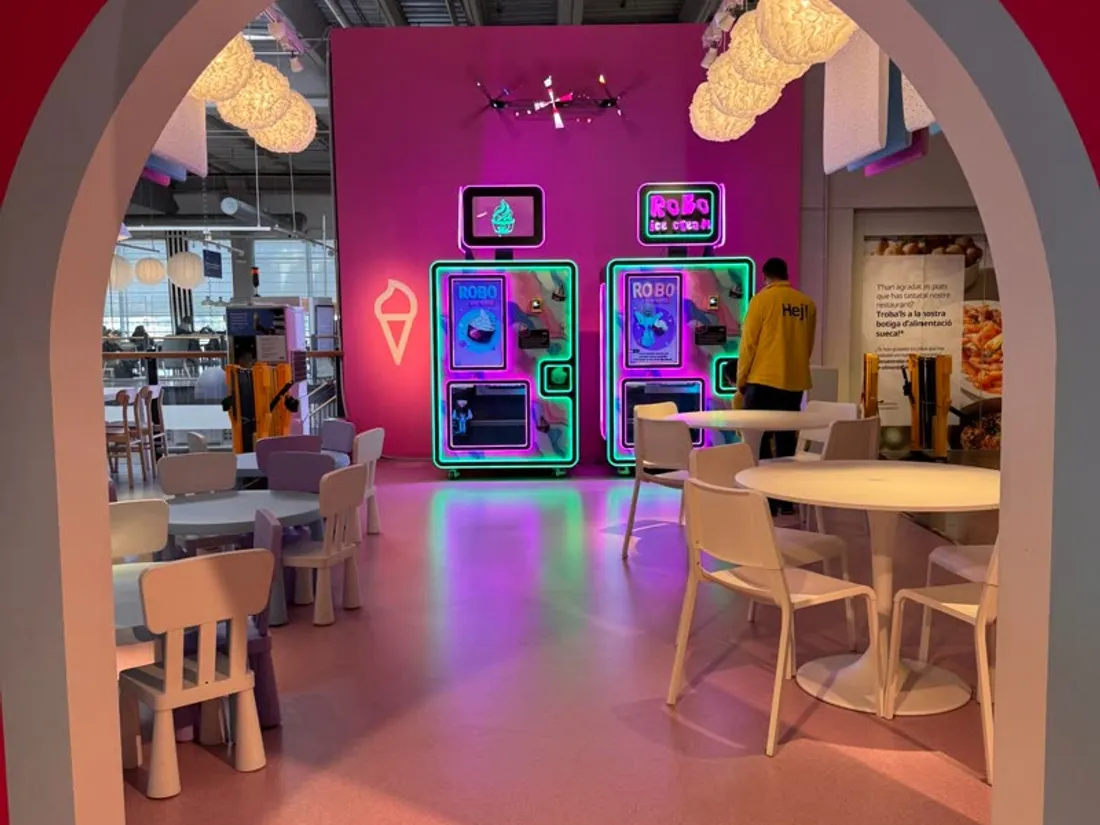
Quick answer: To start an ice cream vending machine business, you pick the kind of venue you want to serve, choose a commercial robotic machine, sign an agreement with a venue, set your price per cup, and restock and clean the machine each week. With Sweet Robo’s Robo Ice Cream, the robot serves a fresh soft-serve cup in about 35 seconds with no staff during the sale, and Sweet Robo’s example sale is a $6 cup that uses about $0.60 in ingredients and cup. Sweet Robo does not publish income figures, because sales depend on the venue, the season and how the machine is run.
Key takeaways
- An ice cream vending machine business is a small automated retail business: you own the robot, the venue hosts it, and you keep the sales after costs.
- The work comes in six steps: venue type, machine, venue agreement, order and setup, pricing and stock, weekly upkeep.
- Sweet Robo’s robotic ice cream vending machine serves a cup in about 35 seconds and holds up to 100 servings per fill.
- Per-sale math, not promises: Sweet Robo’s example is a $6 cup with about $0.60 in ingredients and cup, about $5.40 gross before venue rent, payment fees and your time.
- Finding the venue is your job, and it is the biggest lever on results.
An ice cream vending machine business is one of the simplest ways into automated retail: one machine, one venue and a dessert people already want. The robotic version removes the two hardest parts of a traditional ice cream stand, staffing the counter and keeping the product fresh, because the machine makes each cup to order while the customer watches. This guide walks through how to start one, what one sale looks like on paper, and what you actually do each week.
How an ice cream vending machine business works
An ice cream vending machine business earns money one cup at a time. You buy a machine, place it in a venue under an agreement with the owner (a fixed monthly rent or a share of sales), stock it, and keep what the machine sells after supplies and the venue’s share. With Sweet Robo’s Robo Ice Cream, the customer taps the touchscreen, picks a flavor, toppings and syrup, and the robot dispenses a fresh soft-serve cup in about 35 seconds. The machine takes its own payment through Nayax cashless, a bill acceptor or coin devices, and reports sales and stock to the Sweet Robo tracking app. It still needs you for refills, cleaning and routine checks, so think of it as a business that runs without staff during the sale, not one that runs itself.
How to start an ice cream vending machine business in 6 steps
1. Decide which kind of venue you will serve
Start with the audience, not the machine. Ice cream sells best where families and groups already spend time and a cold treat is an easy yes: family entertainment centers, resorts and hotels, water parks, malls, cinemas, arcades and busy promenades. Quiet office lobbies and low-traffic corners are weaker fits. Writing down two or three venue types first makes every later decision, from the machine to the price, easier.
2. Choose a commercial machine built for unattended sales
A home or countertop soft serve unit is not a vending business. You need a commercial machine that serves each customer without an attendant, takes payment and reports remotely. Sweet Robo’s Robo Ice Cream is an automatic ice cream vending machine that offers two flavors plus a mix, three toppings and three syrups, and serves a 7oz cup in about 35 seconds. Before you commit to any model, run it through a buyer’s checklist for a robotic ice cream machine.
3. Find a venue and agree on terms
Location decides the outcome, and finding it is the operator’s job. The best spots share three traits: heavy foot traffic, a family or leisure audience, and a moment where people wait or linger. Pitch the venue manager on what the machine adds (a dessert option and a small show, with no staff from their side) and agree on rent or a revenue share. Our guide to where to put a vending machine covers how to judge a spot and approach a venue.
4. Order the machine and plan the install
With Sweet Robo, buying starts with a call or a pricing request. You reserve the machine with a 50% deposit, Sweet Robo manufactures it within up to 30 days and ships it worldwide, and it arrives ready to work with free spare parts and a full set of installation training videos. Check the spot before delivery: the Robo Ice Cream F2 measures 87 × 120 × 245 cm (34.3 × 47.2 × 96.5 in), weighs 480 kg and draws up to 4,400 W. The full ordering steps are on the ice cream vending machine for sale page.
5. Set your price and stock the machine
You set the price of every cup. Load the ice cream mix, toppings, syrups and cups, then price against the venue: what a cinema snack costs, what a café charges for a dessert. Sweet Robo provides an ongoing supply pipeline for ingredients and consumables, so restocking stays predictable.
6. Run it week to week
Sweet Robo puts typical upkeep at one to a few hours per week per machine, mostly refilling supplies and a quick cleaning. The tracking app shows live sales, inventory alerts and machine status, so you visit when the machine needs you rather than on a guess.
Questions about this machine? Talk it through with a specialist.
Talk to a specialistThe math of one ice cream sale
One sale is the only honest unit for this business. Sweet Robo’s example sale for the Robo Ice Cream is a $6 cup that uses about $0.60 in ingredients and cup, which leaves about $5.40 gross per serving. That gross amount still has to cover the venue’s rent or share, payment processing fees and your own time, and you can change the price at any point. Sweet Robo does not publish monthly income or payback figures, because the number of cups sold depends on foot traffic, the season, the price and how well the machine is kept stocked and running. Some machines do very well and some do not, and no level of sales is guaranteed.
| One example sale (per Sweet Robo) | Robo Ice Cream |
|---|---|
| Example price per cup | $6.00 (you set it) |
| Ingredients and cup | about $0.60 |
| Gross per cup, before venue share and fees | about $5.40 |
| Serve time | about 35 seconds |
| Cups per fill | up to 100 |
| Staff during the sale | none |
What it costs to start
The startup budget for an ice cream vending machine business has three parts: the machine, the first stock of supplies, and the venue. Sweet Robo quotes the Robo Ice Cream per order, because the price depends on the configuration and how many units you start with, and financing and leasing options are available. On top of the machine, plan for the first round of mix, toppings, syrups and cups, the first month of venue rent or the revenue-share terms you agree on, and an electrical supply that matches the machine. There is no payroll, which is the cost that usually sinks a staffed food business. For a current number, use the pricing form on the Robo Ice Cream page or ask the Sweet Robo sales team.
Why a robotic machine instead of a staffed ice cream stand
A staffed ice cream stand carries two heavy costs: labor and spoilage. The robotic model removes the first and limits the second, because there is no one to pay by the hour and each cup is made to order instead of sitting in a display case. The machine is also its own marketing: people stop to watch a robot prepare their cup, and that small show drives impulse buys and social sharing. Sweet Robo backs the hardware with setup, training, maintenance support and a US-based support team reachable by live chat and video. If you are weighing a classic counter machine instead, read our comparison of a commercial soft serve machine and a robotic one.
Where an ice cream vending machine business does best
The strongest venues for an ice cream vending machine are the ones where families arrive with time to spend: family entertainment centers, resorts and water parks, malls, cinemas, bowling alleys and busy promenades. Judge a spot by how many of the right people pass it and how long they stay, not by the rent alone. If your audience skews younger, compare the cotton candy vending machine, Sweet Robo’s flagship, or browse the full robotic lineup to match the treat to the crowd.
Frequently asked questions
Is an ice cream vending machine business profitable?
It can be, but it is not guaranteed. The machine runs without staff during the sale, so wages do not eat the margin, and Sweet Robo’s example sale is a $6 cup with about $0.60 in ingredients and cup. Whether that adds up depends on how many cups the venue sells, the rent or revenue share you agree on, and how well the machine is kept stocked. Sweet Robo does not publish income figures for that reason.
How much does it cost to start an ice cream vending machine business?
It depends on the machine, the configuration and how many units you start with. Sweet Robo quotes the Robo Ice Cream per order and offers financing and leasing options. Add the first stock of mix, toppings, syrups and cups, the venue terms and the electrical supply at the spot to your budget.
Do I need employees to run an ice cream vending machine?
No staff is needed during each sale: the customer orders on the touchscreen and the robot serves the cup in about 35 seconds. You or a team member still refill supplies, clean the machine and carry out routine checks, typically one to a few hours per week per machine.
How long does it take to get started with Sweet Robo?
After you reserve the machine with a 50% deposit, Sweet Robo manufactures it within up to 30 days and ships it worldwide. It arrives ready to work with installation training videos, and most operators are live within days of delivery.
Where should I put an ice cream vending machine?
In high-traffic venues with a family or leisure audience, such as entertainment centers, resorts, malls, water parks and cinemas. Finding and signing the venue is the operator’s job, so start with our guide to where to put a vending machine.
Ready to see the machine behind the business? Explore the robotic ice cream vending machine, check what to look for before you buy, or read the wider guide to the robotic vending machine business.